



The Science
TRPV6 channels and Cancer
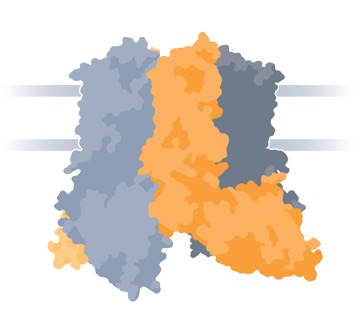
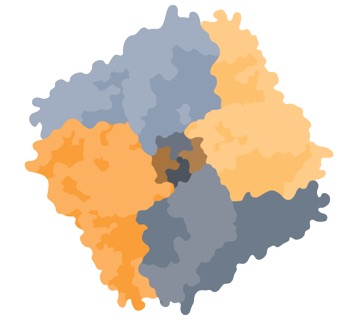
Introduction to TRPV6 channels
As calcium ion is a major signaling component in many cell processes its concentration is very closely regulated in cellular compartments. In 1999 a novel calcium channel was reported in rabbit kidney tubules (ECaC; Hoenderop et al. 1999) and was quickly followed by identification of a related channel in rat gut (CaT1; Peng et al., 1999). These channels bore sequence resemblance to the capsaicin receptor (VR1: vanilloid receptor) reported earlier (Caterina et al., 1997).
ECaC1 and CaT1 (now TRPV5 and TRPV6, respectively), and VR1 (now TRPV1) were recognized as being related to transient receptor potential calcium channels (TRP channels) from Drosophila where they mediate photoreception (Montell, 2003). To date, mammals are reported to have 28 genes for TRP channels divided into six families: TRPA (ankyrin), TRPC (canonical), TRPM (melastatin), TRPML (mucolipin), TRPP (polycystin) and TRPV (vanilloid) (Pederson et al., 2005; Gees et al. 2010). These channels are also distinguished from those calcium channels in excitable tissues (e.g. nerve, neuron) in that they are not voltage-gated.
A sub-family of TRP channels that has received a great deal of study is the TRPV group. Six members, TRPV1 to TRPV6, comprise this group. The first four of the channels are more closely related and have functions in sensing heat, acid, stretching/osmotic strain, nociception and pain signal integration (reviewed in Li et al. 2011). TRPV5 and TRPV6, while clearly related to the first four cousins, have significantly different properties. TRPV5 and TRPV6 are more selective for calcium ion (e.g. PCa/PNa ~ 100) compared to the other four (1 to ~15) and are constitutively active. A major function of these two channels appears to be calcium homeostasis. TRPV5 is expressed predominantly in the distal tubules of the kidney where it reclaims calcium from the pre-urine stream (Nijenhuis et al., 2003). TRPV6, while produced in kidney tubules at lower levels than TRPV5, is predominant in the intestine where it has a role in calcium import.
TRPV6 and Cancer
While recent studies with TRPV6 knock-out mice indicate and reinforce the involvement of this channel in calcium homeostasis (Bianco, 2007), over-expression of the channel has been reported in human malignancies. An early report indicated large amounts of TRPV6 mRNA were measured in a colorectal cancer cell line (SW480) and a chronic myelogenous leukemia cell line (K-562) (Peng et al., 2000). Wissenbach et al. (2001) reported up-regulation of TRPV6 mRNA in prostate cancer while Peng et al. (2001) reported significant elevation of the messenger in prostate cancer cell lines LNCaP and PC3. Most strikingly, Peng et al. (2001) reported a positive correlation of the TRPV6 mRNA signal with the Gleeson scoring of prostate tumours. A recent publication (Peters et al. 2012) identifies TRPV6 as a therapeutic target in estrogen receptor negative breast cancers and shows that up-regulated production of the channel is important in progression of the disease..
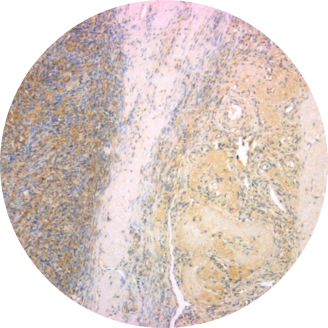
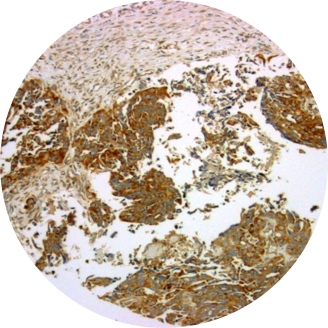
An immunohistochemical approach to determine the amounts of TRPV6 in healthy and malignant tissues expanded the early work showing small amounts of protein in normal exocrine tissues (e.g. mammary gland, pancreas, prostate) but greatly elevated amounts in carcinomas of breast, colon, ovary, prostate and thyroid (Zhuang et al., 2002). Fixemer et al. (2003) expanded and confirmed the positive correlations between TRPV6 over-expression and Gleason scores, pathological stage and extra-prostatic extensions. TRPV6 increases were reported in rat leukemia cells (Bodding et al., 2002) and the human leukemia cell line, K562 (Semenova et al., 2009). The predictive role of TRPV6 in prostate malignancies was suggested by the interpretation that TRPV6-positive tumours have poor prognosis because of a propensity to invade extra-prostate tissues (Wissenbach et al., 2004). The exact role of TRPV6 in cancer proliferation is not clear, but the calcium-dependent proliferation of cancer cells was linked directly to the channel (Schwarz et al., 2006). The role of TRP channels in cancer has been reviewed (Prevarskaya et al., 2007; Bodding, 2007; Nilius et al., 2007; Santoni et al., 2011) while a general role of the TRP channels in prostate gland have recently been reviewed (van Haute, 2010).
It now appears that the influence of elevated TRPV6 in cancers involves activation of the nuclear factor of activated T-cell (NFAT) transcription factors in cell lines of prostate (Lehen’kyi et al., 2007) and breast cancer (Bolanz et al., 2008). In the two latter studies reduction of TRPV6 expression with silencing RNA reduced proliferation and increased apoptosis in these cell lines. SBI has also examined the activation of one of the five NFAT isoforms in ovarian, breast and prostate cancer cell lines, in ovarian tumour biopsies and in xenograft tumours produced from an ovarian cancer cell line (SKOV-3) and breast cancer cell line (T 47D), and have observed activation of NFATc1 (dephosphorylation by Ca+²/calmodulin-activated calcineurin). Such activation requires sustained rather than spiking increases in internal Ca+² concentration. There is a growing consensus that this pathway is involved in both increased cell proliferation and inhibition of apoptosis that is reflected in a recent review article (Figure 2, Huber, 2013).
Working Model of Mechanism of Action
TRPV6 and Cancer: Selected Bibliography
Below is a selection of significant publications showing the link between over-expression of the TRPV6 ion channel and oncology. The active links will provide either a pdf download from an open access site or access to the PubMed citation.
Bodding, M. et al. 2002. The recombinant human TRPV6 channel functions as Ca2+ sensor in human embryonic kidney and rat basophilic leukemia cells. J. Biol. Chem. 277(39): 36656—36664. http://www.jbc.org/content/277/39/36656.long
Bodding, M. 2007. TRP proteins and cancer. Cellular Signalling, 19: 617—624. http://www.ncbi.nlm.nih.gov/pubmed?term=Bodding%20review%20TRP
Bolanz, K. A. et al. 2008. The role of TRPV6 in breast carcinogenesis. Mol Cancer Ther. 7(2): 271—279. http://mct.aacrjournals.org/content/7/2/271.long
Caterina, M. J. et al. 1997. The capsaicin receptor: a heat-activated ion channel in the pain pathway. Nature, 389(6653): 816—824. http://www.ncbi.nlm.nih.gov/pubmed/9349813
Fixemer, T. et al. 2003. Expression of the Ca2+-selective cation channel TRPV6 in human prostate cancer: a novel prognostic marker for tumor progression. Oncogene, 22(49): 7858—7861. http://www.ncbi.nlm.nih.gov/pubmed/14586412
Gees, M. et al. 2010. The role of transient receptor potential cation channels in Ca2+ signalling. Cold Spring Harb Perspect Biol. 2010;2:a003962 http://cshperspectives.cshlp.org/content/2/10/a003962.long
Hoenderop J.G.J. et al. 1999. Molecular identification of the apical Ca2+ channel in 1,25-hidroxyvitamin D3-responsive epithelia. J. Biol. Chem. 274(13): 8375—8378. http://www.jbc.org/content/274/13/8375.long
Huber, S.M. 2013. Oncochannels. Cell Calcium http://dx.doi.org/10.1016/j.ceca.2013.01.001
Lehen'kyi, V. et al. 2007. TRPV6 channel controls prostate cancer cell proliferation via Ca2+/NFAT-dependent pathways. Oncogene. 26: 7380—7385. http://www.ncbi.nlm.nih.gov/pubmed/17533368
Lehen’kyi, V. et al. 2011. TRPV6 determines the effect of vitamin D3 on prostate cancer cell growth. PLoS ONE 6(2): e16856. http://www.plosone.org/article/info%3Adoi%2F10.1371%2Fjournal.pone.0016856
Li, M. et al. 2011. Structural Biology of TRP Channels. Adv Exp Med Biol. 704: 1—23. http://www.ncbi.nlm.nih.gov/pubmed/21290287
Montell, C. 2003. The venerable inveterate invertebrate TRP channels. Cell Calcium, 33: 409—417. http://www.ncbi.nlm.nih.gov/pubmed/12765686
Montell, C. 2011. This history of TRP channels, a commentary and reflection. Pflugers Arch - Eur J Physiol (2011) 461:499–506 http://www.springerlink.com/content/rv75j6nqk60k4n31/fulltext.pdf
Nilius, B. et al. 2007. Transient Receptor Potential Cation Channels in Disease. Physiol. Rev. 87: 165—217. http://www.ncbi.nlm.nih.gov/pubmed/17237345
Pedersen, S.F. et al. 2005. TRP channels: An overview. Cell Calcium, 38: 233—252. http://www.ncbi.nlm.nih.gov/pubmed?term=Pedersen%20TRP%20channels%20over...
Peng, J. et al. 1999. Molecular cloning and characterization of a channel-like transporter mediating intestinal calcium absorption. J. Biol. Chem. 274(32): 22739—22746. http://www.jbc.org/content/274/32/22739.long
Peng, J. et al. 2000. Human Calcium Transport Protein CaT1. Biochem. Biophys. Res. Comm. 278: 326—332. [Note: CaT1 = TRPV6] http://www.ncbi.nlm.nih.gov/pubmed/11097838
Peng, J. et al. 2001. CaT1 expression correlates with tumor grade in prostate cancer. Biochem. Biophys. Res. Comm. 282: 729—734. [Note: CaT1 = TRPV6] http://www.ncbi.nlm.nih.gov/pubmed/11401523
Peters, A. A., et al. 2012. Calcium channel TRPV6 as a potential therapeutic target in estrogen receptor negative breast cancer. Molecular Cancer Therapy. Published online, 17 July, 2012.
http://mct.aacrjournals.org/content/early/2012/07/17/1535-7163.MCT-11-09...
Prevarskaya, N. et al. 2007. TRP channels in cancer. Biochim. Biophys. Acta, 1772: 937—946. http://www.ncbi.nlm.nih.gov/pubmed/17616360
Santoni, G. et al. 2011. TRPV Channels in Tumor Growth and Progression, in Ed. M. S. Islam, Transient Receptor Potential Channels, Ch 49. Adv. in Exp. Med. Biol. 704, DOI 10.1007/978-94-007-0265-3_49. Springer+Business Media B. V. 2011. http://www.ncbi.nlm.nih.gov/pubmed/21290335
Santoni, G. et al. 2011. TRP channels and cancer : new targets for diagnosis and chemotherapy. Endocr. Metab. Immune Disord. Drug Targets. 11(1) : 54—67. http://www.ncbi.nlm.nih.gov/pubmed/21348820
Schwarz, E.C. et al. 2006. TRPV6 potentiates calcium-dependent cell proliferation. Cell Calcium, 39: 163—173. http://www.ncbi.nlm.nih.gov/pubmed?term=Schwarz%20TRPV6
Semenova, S. et al. 2009. Endogenous expression of TRPV5 and TRPV6 calcium channels in human leukemia K562 cells. Am. J. Physiol. Cell Physiol. 296: C1098—C1104. http://ajpcell.physiology.org/lookup/pmid?view=long&pmid=19295174
Van Houte, C. 2010. TRP channels in Human prostate. The ScientificWorldJOURNAL, 10: 1597—1611. http://www.tswj.com/2010/832469/abs/
Wissenbach, U. et al. 2001. Expression of CaT-like, a novel calcium-selective channel, correlates with the malignancy of prostate cancer. J Biol. Chem. 276(22): 19461—19468. http://www.jbc.org/content/276/22/19461.long
Wissenbach, U. 2004. TRPV6 and prostate cancer: cancer growth beyond the prostate correlates with increased TRPV6 Ca2+ channel expression. Biochem. Biophys. Res. Comm. 322: 1359—1363. http://www.ncbi.nlm.nih.gov/pubmed/15336984
Zhuang, L. et al. 2002. Calcium-selective ion channel, CaT1, is apically localized in gastrointestinal tract epithelia and is aberrantly expressed in human malignancies. Lab Invest. 82(12): 1755—1764. http://www.ncbi.nlm.nih.gov/pubmed/12480925